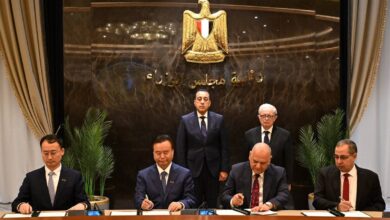
Egyptian President Abdel Fattah Al-Sisi has officially reviewed the nation’s “National Industrial Strategy 2026-2030,” a comprehensive roadmap designed to cement Egypt’s status as a premier regional manufacturing and export hub.
With a primary target of reaching $100 billion in non-oil exports, the initiative focuses on deep structural reforms, supply chain integration, and the localization of high-value industries.
Developed in close collaboration with the private sector, the strategy targets seven priority sectors, including automotive manufacturing, textiles, food processing, pharmaceuticals, and electronics.
A cornerstone of this plan is the National Automotive Industry Development Program, which seeks to attract global manufacturers and accelerate the production of electric vehicles to align with Egypt’s green energy objectives.
Beyond automotive, the government is prioritizing the steel industry and heavy industrial inputs to reduce import dependency and boost domestic value addition.
To ensure long-term competitiveness, the government is rolling out significant legislative and institutional reforms aimed at streamlining industrial project licensing.
Complementing these efforts is the “Industry Solar” initiative, which plans to equip 7,000 factories with rooftop solar systems, and the “Egyptian Initiative for African Industrial Integration.” By strengthening ties within the African Union’s Agenda 2063, Egypt aims to drive intra-African trade and leverage regional resources. President Al-Sisi has directed the immediate execution of these programs, emphasizing the importance of digital transformation, vocational training, and the removal of bureaucratic barriers to attract local and international investors.