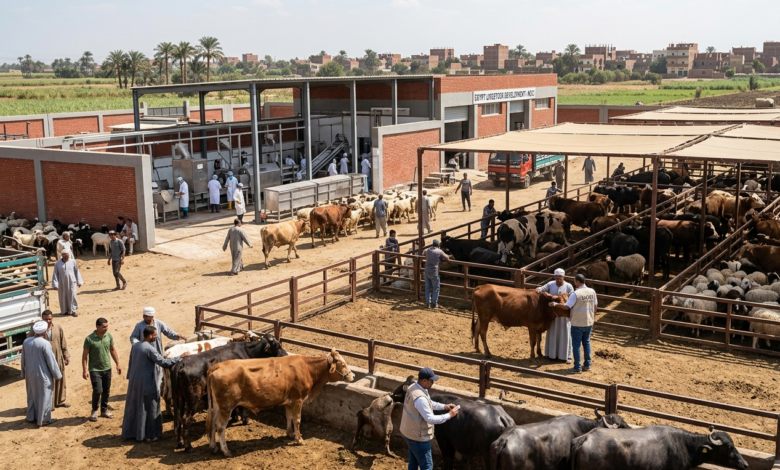
As Egypt’s population exceeds 110 million, the nation’s livestock and meat sector remains a critical pillar of its food security strategy.
Recent industry data highlights a dynamic landscape where the government is intensifying efforts to bridge the gap between domestic production and rising consumer demand through infrastructure modernization and strategic international partnerships.
Livestock Population and Production Dynamics
The domestic livestock population has shown resilience, reaching 8.63 million heads in recent counts, with Beheira, Sharkia, and Minya leading as the country’s primary hubs.
While the sector faces challenges regarding import dependency, current initiatives are focused on enhancing breeding schemes, expanding veterinary services, and optimizing cold chain logistics to reduce waste and stabilize supply.
These efforts aim to improve self-sufficiency rates, which currently stand at approximately 55.4%.
Bridging the Consumption Gap
With domestic fresh meat production totaling 230,064 tons and per capita consumption of red meat averaging 8 kilograms, Egypt continues to rely on strategic imports to meet its annual domestic demand of 1.06 million tons.
The market is increasingly diversified; while local production is dominated by beef and buffalo, the country maintains robust import pipelines for both livestock and frozen meat.
Key global suppliers include Brazil, India, the United States, Colombia, and the Czech Republic, ensuring a steady flow of protein to meet the evolving needs of the Egyptian market.
Future Outlook
Looking ahead, the sector is transitioning toward more formal retail and processing channels.
Driven by urbanization, changing consumer preferences, and economic growth, the Egyptian meat market is projected to maintain a steady growth trajectory.
By investing in slaughterhouse capacity and storage infrastructure, Egypt is positioning itself not only to better serve its domestic population but also to potentially strengthen its role as a regional trading and processing hub for the broader Middle East and Africa.